Transform Your Physique – Complete Gym Training Blueprint
Master progressive overload, periodization, and evidence-based programming to build muscle and strength systematically. Your complete guide to gym training starts here.
The information on this site is for educational purposes only and does not constitute medical advice. Always consult a qualified healthcare professional before making health decisions.
Key Training Metrics That Drive Results
Weeks for Visible Changes
Consistent training with proper nutrition yields noticeable muscle definition
Sessions Per Week
Optimal frequency for muscle development without overtraining
Weekly Load Increase
Progressive overload principle for continuous strength gains
Hours Recovery Time
Rest between muscle groups allows adaptation and growth
Why Progressive Overload Matters for Your Strength
Progressive overload is the cornerstone of muscle and strength development. By systematically increasing demands on your muscles—whether through added weight, extra reps, shorter rest periods, or improved form—you force your body to adapt and grow stronger.
Without progressive overload, your body plateaus. You stop seeing improvements after 4-6 weeks because your muscles have adapted to the stimulus. The key is consistency and systematic progression, not jumping to extreme weights or burning yourself out.
-
Muscle Fiber Recruitment
Increasing load forces recruitment of more muscle fibers for growth
-
Hormonal Response
Challenging workouts trigger anabolic hormone release for adaptation
-
Metabolic Adaptation
Progressive training improves work capacity and exercise efficiency

Core Workout Plan Categories
Push/Pull/Legs Split
Train pushing movements (chest, shoulders, triceps) one day, pulling movements (back, biceps) another, and leg-focused work on the third day. This allows high frequency while managing fatigue.
- • Optimal for intermediate lifters
- • High training frequency per muscle
- • Balanced workout distribution
- • 3-6 days per week flexibility
Upper/Lower Body Split
Separate your training into upper body days (chest, back, shoulders, arms) and lower body days (quads, hamstrings, glutes, calves). Allows you to hit each body part twice weekly.
- • Perfect for strength progression
- • Balanced recovery distribution
- • Twice weekly per muscle group
- • 4-5 days per week recommended
Full Body Routine
Train all major muscle groups in a single session. Ideal for beginners or those with limited time. Three sessions per week hit each muscle group multiple times.
- • Best for beginners
- • Time-efficient (45-60 min)
- • High recovery between sessions
- • 3 days per week optimal
Body Part Specialization
Focus on one or two lagging muscle groups with higher volume while maintaining other areas. Advanced approach for breaking through plateaus on specific body parts.
- • Advanced training method
- • Target weak points directly
- • Requires experience to implement
- • 5-6 days per week
Periodized Strength Training
Vary your training over specific blocks—strength phases (heavy, low reps), hypertrophy phases (moderate weight, 8-12 reps), and endurance phases (lighter, higher reps).
- • Prevents plateaus and boredom
- • Injury prevention through variety
- • Long-term progress optimization
- • 12-16 week cycles
Compound Focus Program
Center your training around multi-joint movements (squat, deadlift, bench press, rows) with minimal isolation work. Builds raw strength and efficient muscle development.
- • Maximum strength gains
- • Efficient training time
- • Builds foundational strength
- • Great for all experience levels
Your 12-Week Transformation Journey
Weeks 1-4: Establishment Phase
Your first month focuses on building consistency and learning proper form. Select a training split that fits your schedule—most beginners benefit from full-body workouts 3 times per week. Focus on controlled movement and mind-muscle connection rather than heavy weight. This phase establishes your baseline and builds the neural adaptation needed for strength progression.
Key focus: Form, consistency, baseline fitness assessment
Weeks 5-8: Strength Build Phase
Now that your foundation is solid, begin progressive overload. Increase weights by 2-5% weekly, add extra reps to exercises, or reduce rest periods. You should feel noticeably stronger. Your body begins showing visual changes. Track all your workouts in a notebook or app to monitor progression and ensure you're pushing harder each week.
Key focus: Progressive overload, strength gains, tracking
Weeks 9-12: Hypertrophy & Definition Phase
In this final phase, increase training volume through additional sets, exercises per muscle group, or training frequency. Your body is now showing visible muscle definition. Consider transitioning to an upper/lower split or push/pull/legs if you started with full-body. Muscle definition becomes evident as your training foundation and nutritional approach mature.
Key focus: Muscle definition, training variation, higher volume
Weeks 13+: Periodization & Long-Term Progress
Avoid plateaus by implementing periodization. Rotate between strength blocks (heavy, low reps), hypertrophy blocks (moderate weight, 8-12 reps), and endurance blocks (lighter, higher reps) every 4-6 weeks. This systematic variation prevents adaptation and keeps your body responding. Document results and adjust based on your goals—strength, muscle size, or athletic performance.
Key focus: Periodized training, plateau prevention, sustainable progression
Exercise Form Reference Library

Barbell Back Squat
The king of lower body exercises. Position the bar across your upper back, maintain a neutral spine, and descend until knees are roughly 90 degrees. Drive through heels to stand. Keep chest up and core tight throughout.

Conventional Deadlift
Start with shins vertical, feet hip-width apart. Grip the bar with straight arms. Drive through heels while maintaining back angle until the bar passes knees, then stand tall. Reverse the movement with control.
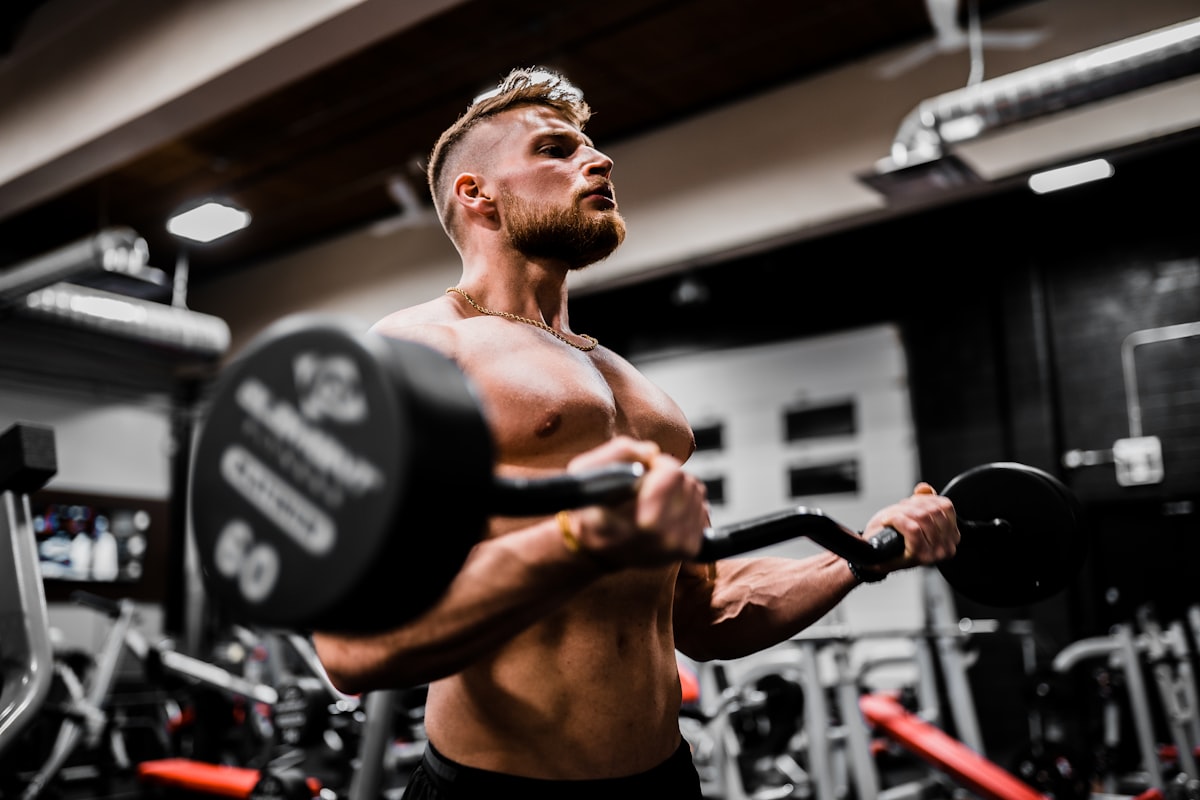
Barbell Bench Press
Lie flat with feet on floor, grip slightly wider than shoulders. Lower the bar to mid-chest with elbows at 45-degree angle. Press powerfully while maintaining full-body contact with bench. Avoid bouncing.

Bent-Over Barbell Row
Hinge at hips until torso is nearly parallel to floor. Grip the bar with straight arms. Pull the bar to your lower chest while retracting shoulder blades. Keep core tight and back angle constant. Lower with control.

Dumbbell Incline Press
Set bench to 45-degree incline. Press dumbbells from shoulder height with slight forward angle. Control the descent to shoulder level. Dumbbells allow greater range of motion than barbells for upper chest emphasis.
Pull-Up (Wide Grip)
Grip the bar wider than shoulder-width with arms extended. Pull your chin above the bar by depressing shoulders and retracting scapula. Lower with control. Wide grip emphasizes lats over arms more than narrow grip.
Common Training Questions Answered
For optimal muscle development, aim for 2-3 times per week training frequency per muscle group. This provides sufficient stimulus while allowing recovery. Beginners often benefit from full-body workouts where every muscle is trained 3 times weekly. Intermediate lifters typically use upper/lower or push/pull/legs splits hitting each muscle 2-3 times. Advanced lifters may use higher-frequency specialization protocols targeting lagging body parts 4+ times weekly while maintaining other areas at 2x frequency.
The key is balancing sufficient stimulus with adequate recovery. More frequent training requires better nutrition, sleep, and stress management.
Success Stories from Our Community
"The macro guidance completely transformed my physique. I gained 12 lbs of lean muscle in 4 months while staying lean. The science-backed approach made all the difference."
– Marcus T.
Fitness Coach
"As a busy professional, I needed a simple nutrition plan. Musclenutritionalperformance broke everything down perfectly. My energy levels are through the roof now."
– Sarah M.
Project Manager
"I recovered so much faster after implementing their recovery nutrition protocols. My lifts increased by 15% in just 8 weeks. Highly recommend!"
– James K.
Powerlifter